

Published on September 25, 2025
"The Life of Ross Ulbricht: From Idealistic Dreamer to Dark Web Pioneer"
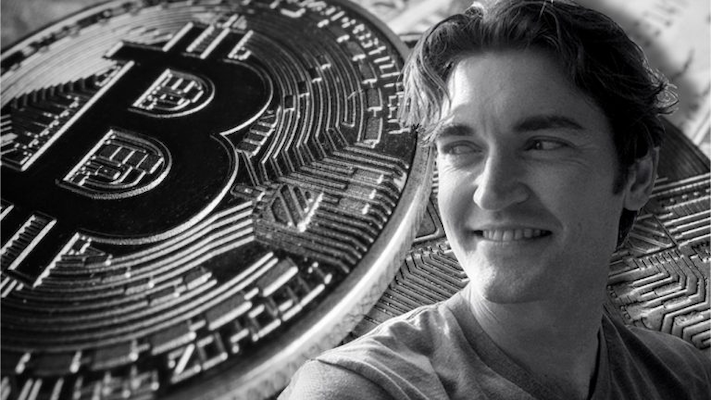
Ross William Ulbricht's story is one of transformation—from an Eagle Scout and academic achiever to the mastermind behind the world's first major darknet marketplace. His journey through early promise, entrepreneurial failures, libertarian awakening, and eventual imprisonment reads like a modern parable about the intersection of technology, ideology, and unintended consequences. Now, after more than a decade behind bars, his recent presidential pardon has thrust him back into the spotlight, making his extraordinary life story more relevant than ever.
Table of Contents
- Early Life and Foundation
- Academic Excellence and Scientific Pursuits
- Philosophical Awakening and Libertarian Conversion
- Early Entrepreneurial Struggles and Mounting Frustration
- The Birth of Silk Road and Digital Transformation
- Silk Road's Evolution and Unprecedented Success
- Law Enforcement Investigation and Growing Pressure
- The Arrest and Dramatic Downfall
- Trial Proceedings and Legal Battles
- Conviction and Harsh Sentencing
- Prison Life and Personal Transformation
- Appeals and Clemency Campaign
- Presidential Pardon and Liberation
- Legacy and Contemporary Relevance

(Affiliate Link: As an Adsterra Associate, I earn from qualifying purchases.)
Early Life and Foundation
Born on March 27, 1984, in Austin, Texas, Ross Ulbricht grew up in what appeared to be an ideal American family. His parents, Kirk and Lyn Ulbricht, provided a nurturing environment for Ross and his sister Calla in the Austin metropolitan area. The family emphasized community service and personal achievement, values that would shape Ross's early character in profound ways.

Ross's childhood was marked by outdoor adventures and creative pursuits rather than technology immersion. His mother Lyn later described him as "a little Buddha"—a peaceful, serene child who spent his formative years drawing, painting, and engaging with Warhammer tabletop games instead of computers. This detail becomes particularly poignant given his future digital endeavors; Ross didn't even own a video game console until age 14, making his later technological sophistication all the more remarkable.
The Boy Scout program played a crucial role in shaping young Ross's character. He progressed through the ranks with dedication and purpose, ultimately achieving the prestigious Eagle Scout rank—an accomplishment that requires extensive community service, leadership skills, and personal commitment. This achievement reflected the disciplined, goal-oriented nature that would later manifest in both positive and destructive ways throughout his life.
Academic Excellence and Scientific Pursuits
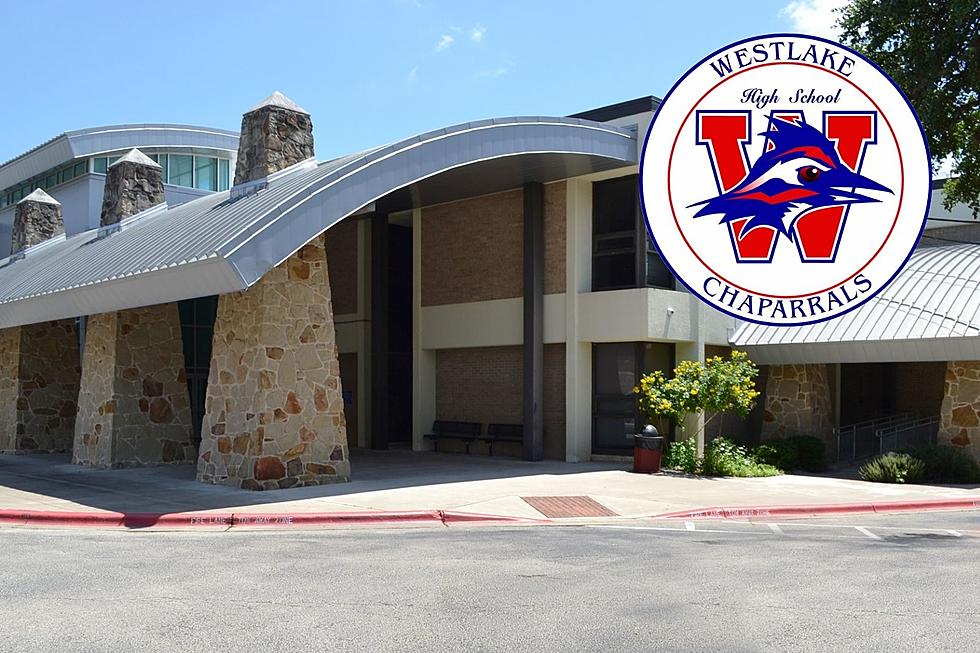
Ross's intellectual capabilities became evident during his time at West Ridge Middle School and Westlake High School in the Eanes Independent School District. Westlake High School, ranked among the top 200 high schools in America at position 106, provided Ross with a challenging academic environment that nurtured his scientific interests. He graduated from high school in 2002, having established himself as a promising student with particular aptitude in the sciences.
His academic excellence earned him a full scholarship to the University of Texas at Dallas, where he pursued a bachelor's degree in physics [1][4]. The scholarship reflected not just his intellectual abilities but also his family's financial needs—a detail that adds context to his later entrepreneurial desperation. At UT Dallas, Ross worked at the Nanotech Institute, where he developed advances in solar energy technology [4]. His research contributions were substantial enough to merit publication in peer-reviewed academic journals, establishing him as a legitimate scientist with a promising future in renewable energy.
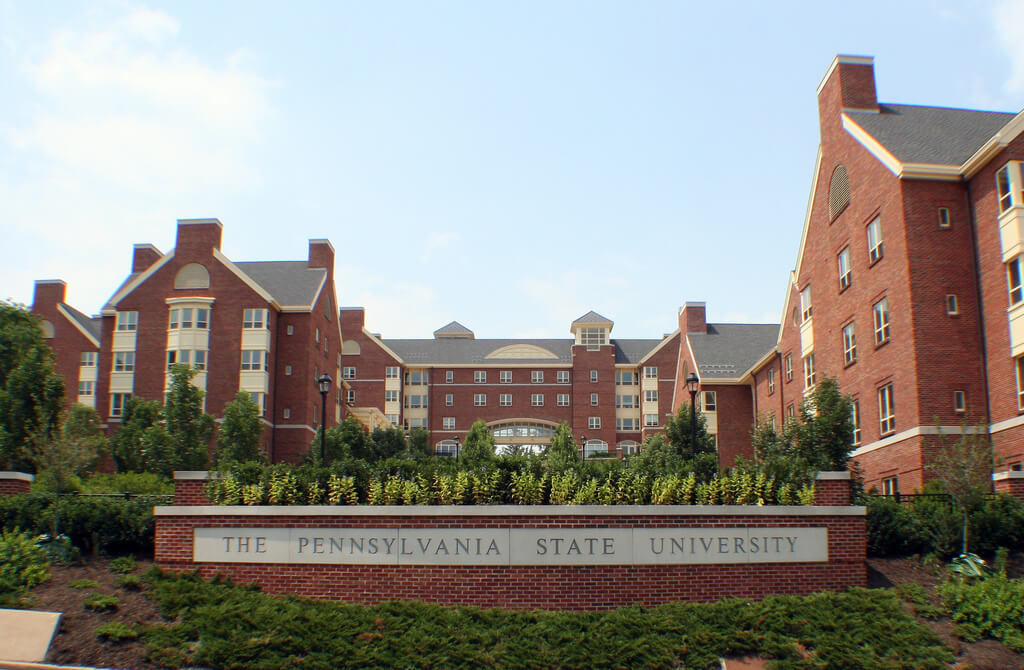
The transition from undergraduate to graduate studies marked a significant period of intellectual expansion for Ross. He received an additional scholarship to attend Pennsylvania State University, where he entered a master's degree program in materials science and engineering, specializing in crystallography. At Penn State, he continued his research trajectory, creating and developing oxide thin films for technological applications—work that further demonstrated his technical competence and scientific methodology.
Philosophical Awakening and Libertarian Conversion
(Affiliate Link:
As an Adsterra Associate, I earn from qualifying purchases.)
(Affiliate link: As an Adsterra Associate, I earn from qualifying purchases.)
(Affiliate Link: As an Adsterra Associate, I earn from qualifying purchases.)
(Affiliate link: As an Adsterra Associate, I earn from qualifying purchases.)
During his graduate studies at Penn State, Ross underwent a profound intellectual transformation that would ultimately determine the course of his life. He became deeply interested in libertarian economic theory, particularly gravitating toward the Austrian School of economics as articulated by Ludwig von Mises. This wasn't merely academic curiosity—Ross became a true believer in free-market principles and minimal government intervention.
His political awakening extended beyond theory into active participation. Ross became a vocal supporter of Ron Paul, the libertarian-leaning Republican congressman whose presidential campaigns championed individual liberty and limited government. Ross participated in college debates, passionately arguing his newfound economic views and developing the rhetorical skills that would later serve him in online forums.
The concept of agorism—a libertarian philosophy advocating for the creation of a society in which all relations between people are voluntary exchanges—particularly resonated with Ross. This ideology provided both the theoretical framework and moral justification for what would become Silk Road. In Ross's worldview, any consensual exchange between adults, regardless of legal status, represented legitimate commerce that governments had no right to prevent.
Early Entrepreneurial Struggles and Mounting Frustration
After graduating from Penn State with his master's degree in 2009, Ross returned to Austin with ambitious plans but limited practical experience in business. The timing couldn't have been worse—the Great Recession had devastated job markets, and Ross found traditional employment both scarce and philosophically unsatisfying. He had become convinced that conventional career paths represented submission to systems he fundamentally opposed. 
His most substantial pre-Silk Road business venture was Good Wagon Books, an online used book retailer he co-founded with his friend Donny Palmertree. The company embodied Ross's emerging social conscience—it employed several people, donated 10% of profits to local charities, and contributed leftover books to prison reading programs. According to Ross's own journal entries, the company stagnated despite their efforts to expand, a failure that was particularly devastating.
The Birth of Silk Road and Digital Transformation

(Affiliate link: An Adsterra Associate, I earn from qualifying purchases.)
(Affiliate link: An Adsterra Associate, I earn from qualifying purchases.)
By early 2011, Ross had reached a personal and professional crossroads. His journal entries from this period reveal a young man grappling with repeated failures while maintaining unwavering belief in his libertarian principles. The concept of Silk Road emerged from this intersection of personal desperation and ideological conviction. He built the marketplace on the Tor network to enable user anonymity and integrated Bitcoin as the exclusive payment method, eliminating the need for traditional banking systems. Operating under the pseudonym "Dread Pirate Roberts," a reference to "The Princess Bride," he launched his experiment.
Law Enforcement Investigation and Growing Pressure
As Silk Road's prominence grew, it inevitably attracted law enforcement attention from multiple agencies. The investigation was massive but compromised from within. Two federal agents, DEA agent Carl Force and Secret Service agent Shaun Bridges, were simultaneously conducting their own criminal schemes, extorting Bitcoin from Ross and stealing funds from the investigation. This corruption was kept secret during Ross's trial, denying him the opportunity to argue that the evidence against him had been tainted.
The Arrest and Dramatic Downfall
Ross's arrest on October 1, 2013, was orchestrated with theatrical precision at the Glen Park Branch Library in San Francisco. Agents needed to catch him logged into the Silk Road administrative panel. They staged a loud argument to distract him, and while he looked up, one agent seized his open laptop while another placed him under arrest. The timing was crucial, as it gave an FBI forensics expert immediate access to a treasure trove of incriminating evidence on the computer, including his detailed personal journal.
Trial Proceedings and Legal Battles
Ross's trial began on January 13, 2015. The prosecution presented his journal and administrative records as overwhelming evidence of his identity as Dread Pirate Roberts. Controversially, prosecutors also introduced evidence alleging Ross had paid for murder-for-hire plots, though no murders ever occurred and he was not formally charged with these acts in his New York trial. These allegations significantly influenced his sentencing. The corruption of agents Force and Bridges was not revealed until after his conviction, raising serious questions about prosecutorial fairness.
Conviction and Harsh Sentencing
On February 4, 2015, Ross was convicted on all counts, including engaging in a continuing criminal enterprise and narcotics conspiracy. On May 29, 2015, Judge Katherine Forrest sentenced Ross, a first-time, non-violent offender, to double life imprisonment plus 40 years without parole. The judge cited the scale of Silk Road and the uncharged murder-for-hire allegations as justification for the severe sentence.
Appeals and Clemency Campaign
As legal appeals were exhausted, Ross’s supporters launched a clemency campaign targeting multiple presidential administrations. The campaign highlighted his disproportionate sentence, the corruption in his case, and his exemplary prison conduct. Ross became a cause célèbre in libertarian and cryptocurrency communities, who viewed his case as an example of government overreach.
Presidential Pardon and Liberation
On January 21, 2025, President Donald Trump granted Ross Ulbricht a full and unconditional pardon, ending his more than 11-year imprisonment. The pardon fulfilled a campaign promise made to libertarian supporters. While supporters hailed it as a correction of injustice, critics argued it sent a dangerous message about accountability for cybercrime.
Legacy and Contemporary Relevance
Ross Ulbricht's story transcends simple categories of hero or villain, representing the complex intersection of technology, ideology, and unintended consequences in the digital age. The technical innovations he pioneered—integrating Tor and cryptocurrency—became foundational for subsequent darknet markets. His case highlighted significant issues within the American criminal justice system, from sentencing disparities to prosecutorial conduct.
His recent liberation ensures that Ross Ulbricht's story is far from over. At 41 years old, he faces the challenge of rebuilding his life in a world transformed by the very technologies he helped pioneer. His future will determine whether his legacy is ultimately a cautionary tale or one of redemptive transformation.
